
Roadmap to Becoming a Full-Stack Developer: Your 2026 Career Path
In the rapidly evolving tech landscape of 2026, the roadmap to becoming a full-stack developer has changed significantly. No longer is it enough to just know HTML and CSS. Today's developers must master the art of combining front-end aesthetics, back-end logic, and AI-driven efficiency. Whether you are a total beginner or a career switcher, this guide provides a clear, actionable path to mastering the entire web development cycle from scratch.
📚 Table of Contents
- Phase 1: The Front-End Foundation
- Phase 2: Back-End Development Essentials
- Phase 3: Databases and Data Management
- Phase 4: Mastering AI-Powered Coding Tools
- Pro Tips for Coding Success
- Frequently Asked Questions
🎨 Phase 1: Building a Strong Front-End Foundation
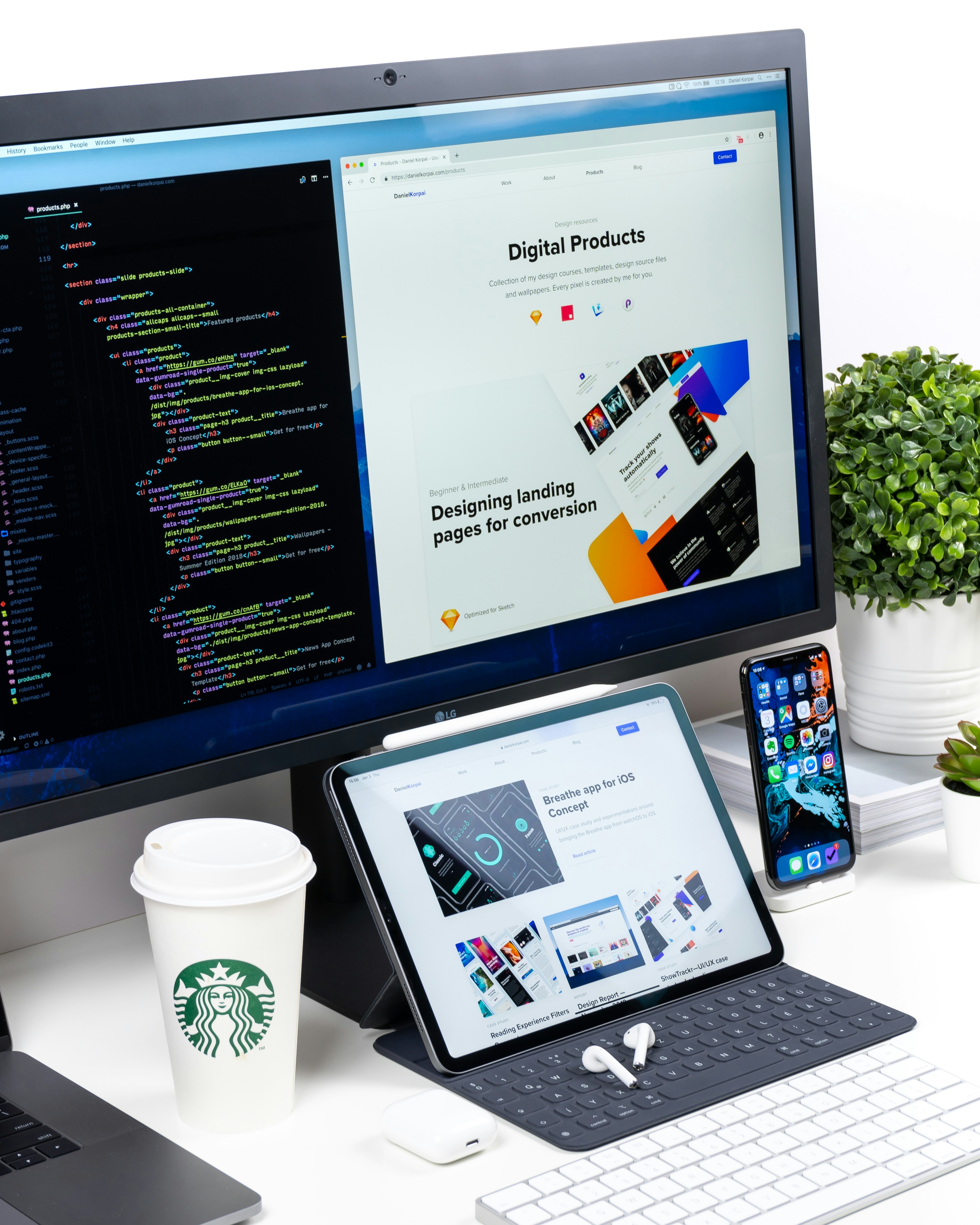
Every successful front-end roadmap 2026 begins with the basics. You must first understand how the user interacts with the browser. Your goal here is to build websites that are not only functional but also visually stunning and responsive.
Source: Unsplash
- HTML5 & CSS3: Master semantic HTML and modern CSS layouts like Flexbox and Grid.
- JavaScript (ES6+): Learn the language of the web. Focus on asynchronous programming and DOM manipulation.
- React or Next.js: In 2026, Next.js is the industry standard for building fast, SEO-friendly applications.
- Responsive Design: Ensure your apps look perfect on mobile, tablet, and desktop screens.
⚙️ Phase 2: Back-End Development Essentials
The back-end is the "brain" of your application. As part of your roadmap to becoming a full-stack developer, you must learn how to handle server-side logic, user authentication, and API integrations. This is where the magic happens behind the scenes.
While there are many languages, the most popular choice for beginners is the learn MERN stack for beginners path (MongoDB, Express, React, Node.js). It allows you to use JavaScript for both the front and back end, which speeds up the learning process tremendously.
Key Back-End Concepts:
- Node.js & Express: Build scalable server-side applications.
- RESTful APIs: Learn how to create communication bridges between the client and the server.
- Authentication: Master JWT (JSON Web Tokens) and OAuth to keep user data secure.
🗄️ Phase 3: Databases and Cloud Deployment

Source: Pexels
Data is the currency of the modern world. To be a true full-stack expert, you need to know how to store, retrieve, and manage that data efficiently. You should familiarize yourself with both SQL (Structured) and NoSQL (Unstructured) databases.
- MongoDB: Great for flexible, document-based data.
- PostgreSQL: The gold standard for relational data and complex queries.
- Deployment: Learn to host your projects on platforms like Vercel, Netlify, or AWS to make them accessible to the world.
🤖 Phase 4: Integrating AI-Powered Coding Tools
In 2026, a developer's productivity is measured by how well they use technology. AI-powered coding tools like GitHub Copilot and Cursor have become essential parts of the developer workflow. They don't replace the developer; they act as a "co-pilot" to write boilerplate code and debug errors faster.
Learning how to prompt these AI tools correctly will make you 10x faster than traditional coders. This is a vital part of the best full-stack tech stack 2026.
💡 Pro Tips for Your Coding Journey
- Build Projects, Not Just Tutorials: Don't get stuck in "tutorial hell." Build a real-world app like a task manager or a social media clone to solidify your skills.
- Master Git and GitHub: Version control is a non-negotiable skill in any professional tech environment.
- Understand the Fundamentals: Frameworks come and go, but strong logic and data structure knowledge will last forever.
- Read Documentation: Developing the habit of reading official docs will make you a much more independent developer.
❓ FAQ: Roadmap to Becoming a Full-Stack Developer
1. How long does it take to become a full-stack developer in 2026?
With consistent daily effort (3-5 hours), most dedicated learners can reach a junior developer level in 6 to 9 months. However, mastery is a lifelong journey.
2. Do I need a Computer Science degree?
No. While a degree can help, many of the world's most successful developers are self-taught or bootcamp graduates. Companies in 2026 care more about your portfolio and problem-solving skills than your diploma.
3. Which stack is best for beginners?
The MERN stack (MongoDB, Express, React, Node.js) remains the most beginner-friendly because it uses JavaScript throughout the entire stack.
📌 Conclusion
The roadmap to becoming a full-stack developer is a marathon, not a sprint. By mastering the back-end development essentials, staying updated with front-end roadmap 2026 trends, and leveraging AI tools, you are setting yourself up for a high-paying, future-proof career. Start today by writing your first line of code, stay consistent, and remember that every expert was once a beginner. Your tech future starts now!
Join the conversation